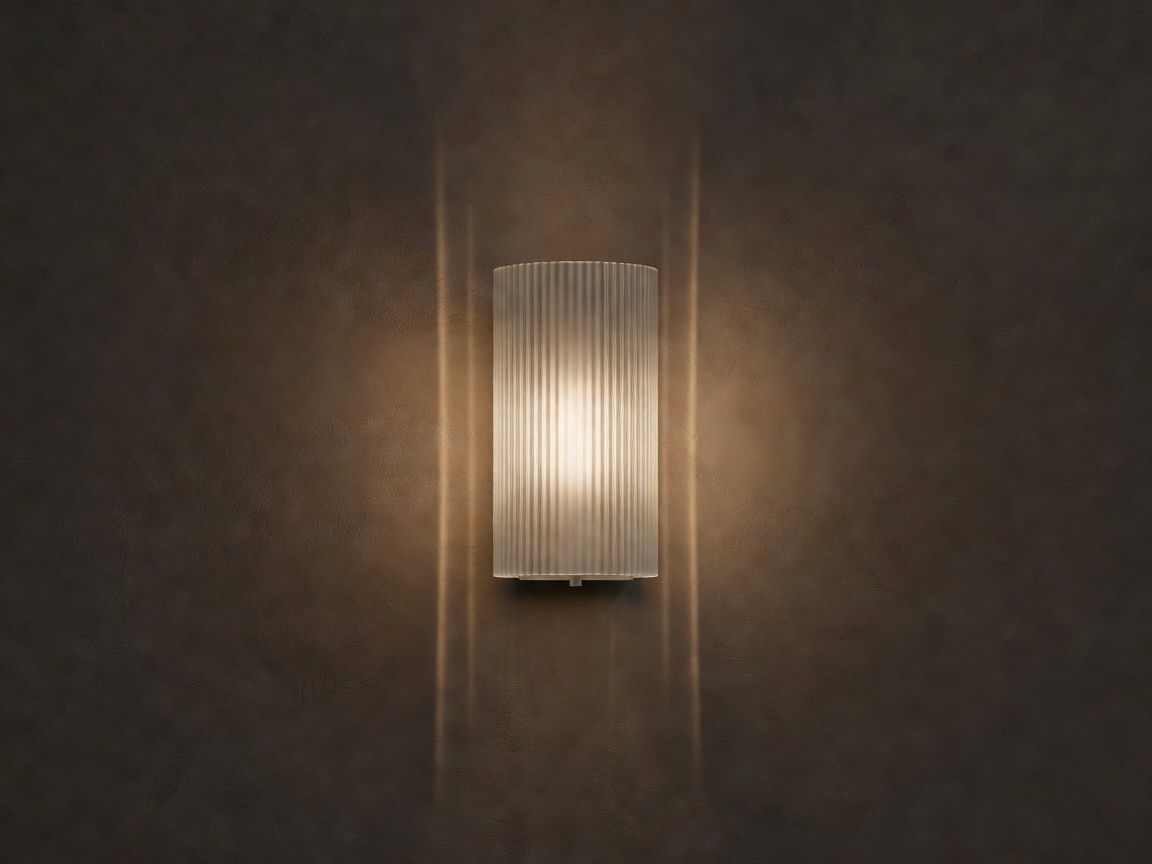
Three layers instead of one ceiling grid
Walk into an under-considered restaurant at dusk and you will usually spot a single uniform grid of recessed downlights dimmed halfway down. Everything looks equally beige. Faces fall into deep brow shadows, wine glasses lose their rim highlights, and menus require a phone flashlight. The flaw is not the dimming level; it is the absence of hierarchy.
Architectural lighting designer Richard Kelly established a clearer structure in the 1950s—most famously in his work with Philip Johnson and Mies van der Rohe on New York's Four Seasons Restaurant. Kelly broke interior illumination into three distinct layers: ambient luminescence to wash walls and ceilings softly so the room's boundaries remain readable; focal glow to pull the eye toward plates, menus, and floral anchors; and a play of brilliants—candles, filament glints, and grazing highlights across bottle shelves—that gives the room pulse.
When those three layers sit on separate dimming channels, operators gain theatrical control. Walls stay softly brushed at 10 to 20 lux so guests do not feel trapped inside a black box, while narrow 18-to-28-degree pinspots or shielded pendants deliver a crisp 50 to 70 lux pool strictly across the tabletop. Because the contrast ratio between plate and aisle sits around 4:1 or 5:1, the dish appears luminous even though overall room wattage remains remarkably low.