Touch Before Sight
The five surfaces every guest touches
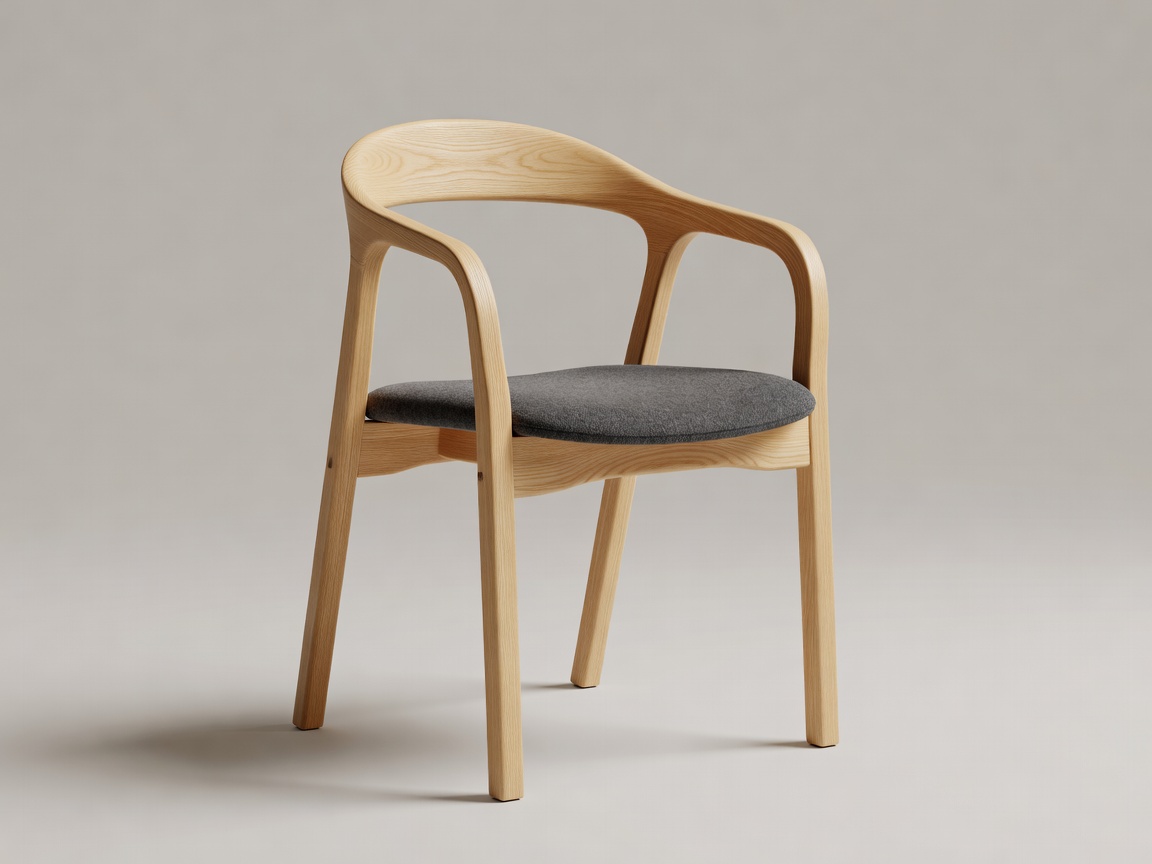
Architects love tall ceilings and dramatic murals, yet during a ninety-minute meal a diner spends nearly every second in contact with just five zones: the entrance door handle, the chair seat and backrest, the underside and top edge of the table, the napkin, and the glassware. As British designer Ilse Crawford (founder of Studioilse) has long argued in hospitality work, designing outward from human touch points builds emotional warmth far more reliably than chasing dramatic focal walls.
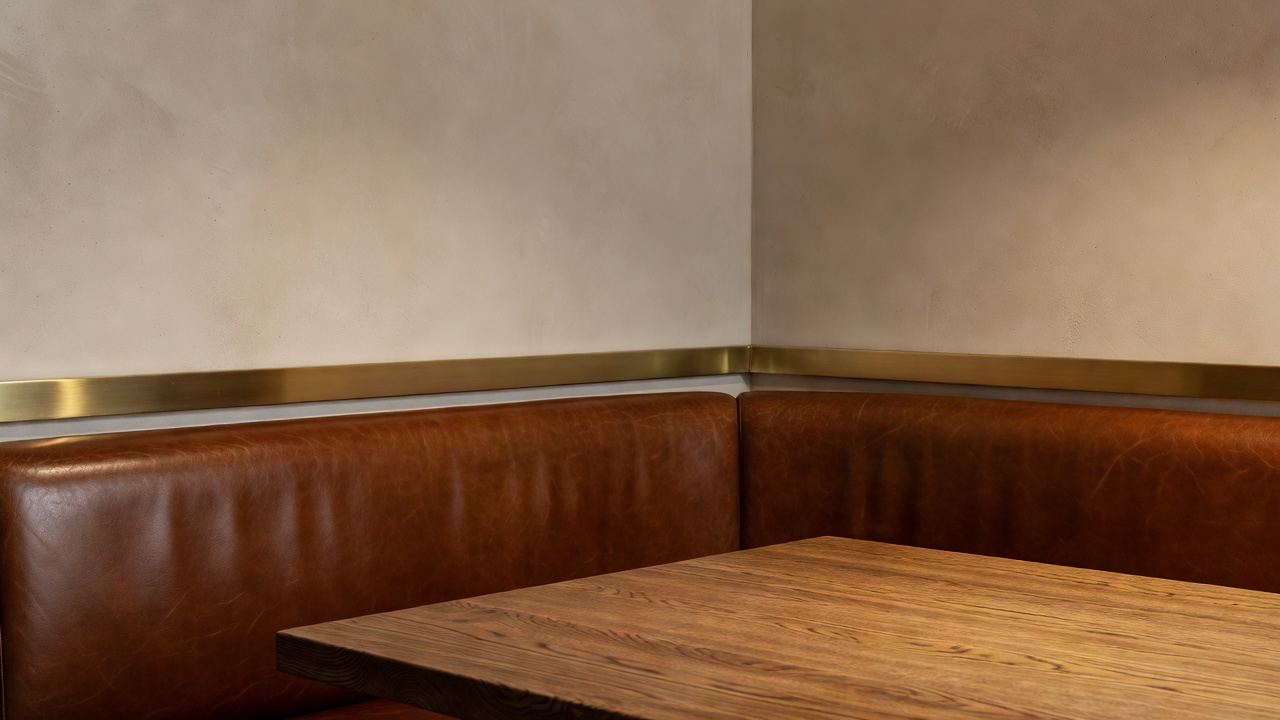
Notice the edge profile of a dining table. A sharp 90-degree laminated corner digs into forearms within twenty minutes, silently nudging diners to pull back. A gently bullnosed or chamfered 35 mm solid oak or ash edge invites hands to rest comfortably between courses. Similarly, unlacquered brass bar rails and oiled saddle leather warm quickly to skin temperature, whereas cold chrome and thin glossy veneer feel transactional—useful for a twenty-minute coffee counter, jarring for a three-course supper.
Surface Performance
How hospitality materials age under nightly service
Commercial dining rooms punish finishes mercilessly: red wine spills, citrus acid, hot espresso cups, sanitizer wipes, and thousands of shoe scuffs along banquette plinths. Choosing "honest" materials—those whose wear turns into patina instead of structural failure—protects both maintenance budgets and atmosphere in year three.
| Surface Material | Sensory Character | Acoustic Role | Wear & Maintenance Reality |
|---|---|---|---|
| Oiled Solid Oak / Ash | Warm under wrists, matte grain softens spotlight glare | Moderate; improves when paired with felt underside | Re-oils cleanly overnight; minor scratches blend into natural grain. |
| Honed Limestone / Marble | Cool, dense, classic brasserie weight | Reflective; amplifies plate and cutlery impact | Etches from lemon and wine—choose honed rather than polished finishes. |
| Full-Grain Aniline Leather | Supple, warms rapidly, rich scent and grip | Helpful soft mass on banquettes and chairs | Scuffs buff into warm patina; avoid cheap bonded coatings that peel. |
| Limewash & Clay Plaster | Velvety matte depth under grazing sconce light | Slightly softer than gloss enamel paint | Needs timber wainscot or dark dado rail below 1100 mm chair-rub height. |
| Heavy Wool & Linen Weave | Domestic comfort, absorbs visual sharpness | Strong mid-to-high frequency absorption | Select Martindale abrasion rating ≥ 50,000 rubs for commercial seating. |
Pace & Coherence
Matching the room to the menu's clock
Every concept carries an implicit clock. A lunchtime ramen counter or natural wine bar thrives on crisp turnover—roughly 45 to 70 minutes per party—so lighter chairs, higher ambient brightness, tighter table pitch, and brisker acoustic energy reinforce the kitchen's tempo. Conversely, a destination dining room like Oslo's Maaemo stages multi-hour courses where deep shadow transitions, heavy ceramic tactility, hushed 0.55-second reverberation, and generously padded seating slow the guest's sense of time.
Friction arises when interior mood fights operational reality. Placing plush deep lounge armchairs at a low-margin neighborhood bistro stalls table turns on busy weekends; installing stark metal stools and bright exposed bulbs inside a slow tasting menu room makes diners restless halfway through the third course. When lighting warmth, reverberation decay, aisle calm, and tactile materials all answer the same question—how should an evening here feel from minute one to minute ninety?—the room develops a coherent voice that no trend cycle can date.